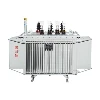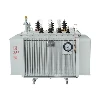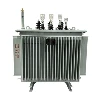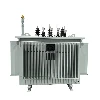

Distribution transformers are primarily used to step down voltage to the operating levels required by electrical equipment for daily lighting and industrial power; the low-voltage side is typically 0.4 kV or lower. Power transformers, on the other hand, encompass all transformers used within the power grid-including those at stages preceding distribution-and are used to transfer electrical energy between grids of different voltage levels; their low-voltage side is generally 3 kV or higher, and the category includes distribution transformers. The specific differences are as follows:
Definitions and Applications
- Distribution Transformer: A transformer that steps down voltage to the operating level of electrical equipment; it is primarily used in distribution networks to supply power to end-users. Typically mounted on utility poles or installed in distribution substations, it reduces voltage from the 6–10 kV range to approximately 400 V for delivery to users, supporting daily lighting and industrial power needs.
- Power Transformer: A collective term for all transformers used in the power grid, including those operating at stages prior to distribution. They are primarily used to transfer electrical energy between grids of different voltage levels-for instance, a regional substation might employ a transformer to exchange energy between 500 kV and 220 kV grids.
Voltage Levels
- Distribution Transformer: High-voltage side ratings can reach up to 66 kV, while low-voltage side ratings include 380/220 V, 3 kV, 6 kV, and 10 kV; however, the most common configuration features a rated high-side voltage of 10 kV and a rated low-side output voltage of 400 V (i.e., 0.4 kV).
- Power Transformer: The low-voltage side is generally rated at 3 kV or higher, covering a wide range of voltage levels from low to high, facilitating energy transfer between grids of different voltages.
Voltage Regulation Methods
- Distribution Transformer: Typically features tap-changing capabilities (usually with three to five settings) to adjust the high-side voltage, thereby meeting voltage requirements under varying load conditions.
- Power Transformer: Voltage regulation methods can be more complex and diverse, depending on the specific role within the grid and the design requirements.
Capacity and Scale
- Distribution Transformer: Generally has a relatively small capacity, primarily serving the power needs of a localized area.
- Power transformers: Typically possess large capacities-especially those used for power exchange between regional grids-to meet the demands of large-scale power transmission and distribution.
Installation Locations and Application Scenarios
- Distribution transformers: Usually installed on utility poles, in distribution substations, or near end-users to step down high-voltage power to low-voltage power for consumer use.
- Power transformers: May be installed at substations, power plants, or critical nodes within the power grid to facilitate interconnection and power exchange between grids operating at different voltage levels.