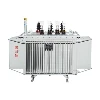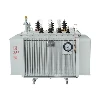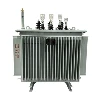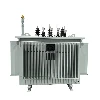

The core technical parameters of dry-type transformers primarily include rated capacity, voltage class, insulation class, loss values, short-circuit impedance, temperature rise limits, and protection class; specific values are determined based on the model and applicable standards.
What are the main electrical parameters?
- Rated capacity and voltage: Common distribution transformer capacities range from 30 kVA to 2,500 kVA, while power transformers can reach 20,000 kVA; common high-side voltages are 6 kV, 10 kV, 20 kV, and 35 kV, with the low-side typically at 0.4 kV.
- Frequency and connection group: The rated frequency is generally 50 Hz or 60 Hz, and common connection group designations are Dyn11 or Yyn0.
- Short-circuit impedance: Typical values range from 4% to 6%, depending on capacity and design requirements.
- No-load and load losses: These are key indicators of energy efficiency; following the implementation of the new national standard GB20052-2020, loss levels for Grade 1 energy-efficient units (such as the SCB18 series) are significantly lower than under previous standards.
How are insulation and temperature rise specified?
- Insulation heat resistance class: Class F (limit temperature 155°C) and Class H (limit temperature 180°C) are commonly used; Class C can be customized for special applications.
- Temperature rise limits: Taking Class F insulation as an example, the winding temperature rise limit is typically 100 K (relative to an ambient temperature of 40°C); the total winding temperature during operation should not exceed 140°C to maintain a safety margin.
- Insulation resistance and withstand voltage: Insulation resistance is typically required to be ≥2 MΩ or higher; withstand voltage strength must be verified through power-frequency withstand voltage tests (e.g., 20,000 V/min without breakdown).
What are the operating environment requirements?
- Altitude and Temperature: The standard operating altitude is up to 1,000 meters. Ambient temperature typically ranges from -5°C to +40°C for indoor use, while the outdoor range can extend from -30°C to +40°C.
- Cooling Method: Options include natural air cooling (AN) and forced air cooling (AF). Natural air cooling allows for continuous long-term operation, whereas forced air cooling can increase output capacity by approximately 50%.
- Protection Rating: IP20 (protection against solid objects larger than 12mm in diameter) is common for indoor use, while IP23 (protection against water droplets falling at angles up to 60°) is an option for outdoor use; the impact on heat dissipation must be considered when operating with an enclosure.
- Noise Level: Noise levels for distribution transformers rated at 2,500 kVA or below are generally controlled at around 50 dB, with some low-loss models capable of operating below 30 dB.