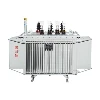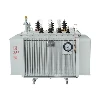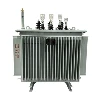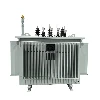

Power transformers are among the primary pieces of equipment in power plants and substations. They serve multiple functions: they can step up voltage to transmit electrical energy to consumption areas and step down voltage to levels suitable for end-use requirements. In short, both voltage step-up and step-down operations rely on transformers. During the transmission of electrical energy within a power system, losses in both voltage and power inevitably occur; for a given power transmission level, voltage loss is inversely proportional to the voltage, while power loss is inversely proportional to the square of the voltage. Using transformers to increase voltage helps reduce transmission losses.
A transformer consists of two or more coil windings wrapped around a common iron core; these windings are linked by an alternating magnetic field and operate based on the principle of electromagnetic induction. When selecting an installation site, factors such as ease of operation, maintenance, and transport must be considered, alongside safety and reliability. Proper selection of the transformer's rated capacity is essential during use. When a transformer operates at no-load, it requires a significant amount of reactive power, which must be supplied by the power system. If the selected capacity is excessively large, it not only increases initial investment costs but also results in prolonged no-load or light-load operation; this increases the proportion of no-load losses, lowers the power factor, and raises network losses-making such operation neither economical nor rational. Conversely, if the capacity is too small, the transformer may be subjected to prolonged overloading, making it prone to damage. Therefore, the rated capacity should be selected based on actual load requirements, avoiding extremes that are either too high or too low.