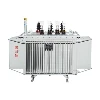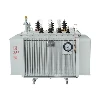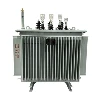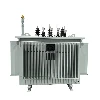

Since 2000, driven by urban and rural power grid renovation projects, China's distribution transformer industry has maintained strong growth momentum. In 2008, China's annual production of distribution transformers exceeded 400 million kVA, accounting for nearly 40% of total transformer output. By 2010, China's total transformer output reached 1.223 billion kVA; based on the 40% ratio, the output of new distribution transformers for that year is estimated at 534 million kVA. In 2010, the distribution transformer manufacturing sector generated an output value of approximately 42.518 billion yuan, a year-on-year increase of 18.84%.
As China's policies on energy conservation and consumption reduction deepen, the state is encouraging the development of energy-efficient, low-noise, and intelligent distribution transformer products. Some high-energy-consumption distribution transformers currently in operation no longer align with industry trends and require technological upgrades or replacement; in the future, they will gradually be superseded by transformers that are energy-efficient, material-saving, environmentally friendly, and low-noise.
The mainstream energy-efficient distribution transformers consist primarily of two types: energy-efficient oil-immersed transformers and amorphous alloy transformers.
Oil-immersed distribution transformers are categorized by loss performance into the S9, S11, and S13 series. Compared to the S9 series, the S11 series offers 20% lower no-load loss, while the S13 series offers 25% lower no-load loss than the S11 series. The State Grid Corporation has already widely adopted S11 series distribution transformers and is gradually promoting the S13 series in urban grid renovations; in the near future, S11 and S13 series oil-immersed distribution transformers are expected to completely replace the S9 series units currently in operation.
Amorphous alloy transformers offer a combination of energy efficiency and economic viability. Their standout feature is extremely low no-load loss-only about 20% that of S9 series oil-immersed transformers. They align with national industrial policies and grid requirements for energy conservation and consumption reduction, making them an ideal choice for energy efficiency, particularly in areas with low load rates, such as rural power grids. Although the National Development and Reform Commission (NDRC) began encouraging and promoting amorphous alloy transformers as early as 2005, large-scale production has been hindered by insufficient production capacity for the raw material-amorphous alloy strip. Amorphous alloy transformers account for only 7%–8% of distribution transformers currently in operation, with widespread adoption limited to regions such as Shanghai, Jiangsu, and Zhejiang.
Competition in the distribution transformer sector is fierce. The promotion of energy-efficient transformers faces challenges due to high raw material costs, the higher initial investment required, and shortcomings in energy-saving assessment systems and market oversight.
While China was a late starter in developing energy-efficiency standards and policies for transformers, progress has been rapid; with the continued revision and implementation of energy-efficiency standards for distribution transformers, China is set to match the highest standards found in developed nations. In terms of both energy conservation and technical capability, China's transformer industry is poised to take a leading position globally. More importantly, energy efficiency is not defined solely by the rated loss values established at the factory; the adoption of a full-lifecycle management approach by users-focusing on the economic operation of the equipment-allows the product to deliver maximum energy-saving value, thereby realizing the true benefits of energy-efficient transformers.