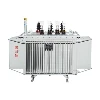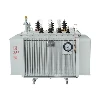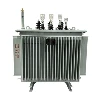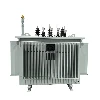

A combined transformer (commonly known as an "American-style box-type transformer" or "pad-mounted transformer") is a complete set of power distribution equipment that integrates the transformer core and windings, high-voltage load-break switch, protective fuses, tap changer, and associated auxiliary devices into a single unit.
Components such as the fuses, multi-position ring-main load-break switch, and off-circuit tap changer are housed within the transformer's oil tank; however, the fuses can be easily replaced and the load-break switch operated from the outside to adjust the transformer's operating conditions. Power enters the high-voltage side via load-break elbow connectors, while a low-voltage output compartment is mounted externally, offering space to install protective devices and metering instruments as required. All live parts are enclosed within the housing, leaving no exposed live components. Because the primary components are contained within the oil tank, it is classified as a "combined transformer" rather than a "box-type substation," although it performs the functions of the latter. The high-voltage side is equipped with six cable bushings, enabling the transformer to connect to a ring-main power supply system-working in conjunction with cabinet-style ring-main units or cable branch boxes. Thus, the terms "combined transformer," "pad-mounted transformer," and "American-style box-type transformer" all refer to the same product: a unit primarily consisting of a transformer, not a substation.